
10 Silicon Diode Buying Tips for Global Buyers?

Buying a Silicon Diode across borders is not simply a matter of comparing prices. The right choice depends on electrical performance, supply stability, documentation, and application conditions. A diode that works well in a laboratory may fail beside a hot motor, under repeated surges, or inside a poorly ventilated enclosure.

Bob Pease, a respected analog electronics engineer, offered a practical warning: “The best way to solve a problem is to avoid it.” That principle fits component sourcing. Buyers should confirm reverse-voltage ratings, forward-current limits, leakage current, switching speed, package type, and thermal resistance before placing an order. Small details matter. A 1N4007 may suit a low-frequency rectifier, but it is not automatically suitable for fast switching. Datasheets deserve careful reading.

Traceability matters too. Check the manufacturer’s authenticity, date codes, test reports, RoHS information, and approved distributor status. Ask how products are stored and packed. Moisture, mixed date lots, and weak packaging can create expensive surprises. Global shipping also adds variables, including lead time, customs documentation, and replacement availability.

No checklist is perfect. Real circuits remain less forgiving than spreadsheets. Some buyers focus heavily on unit cost and overlook heat dissipation or voltage spikes. That mistake can erase the original savings. These ten Silicon Diode buying tips provide a practical framework for comparing suppliers, verifying technical claims, and reducing avoidable procurement risk. They cannot replace engineering judgment, but they can make each purchasing decision more deliberate, measurable, and reliable.
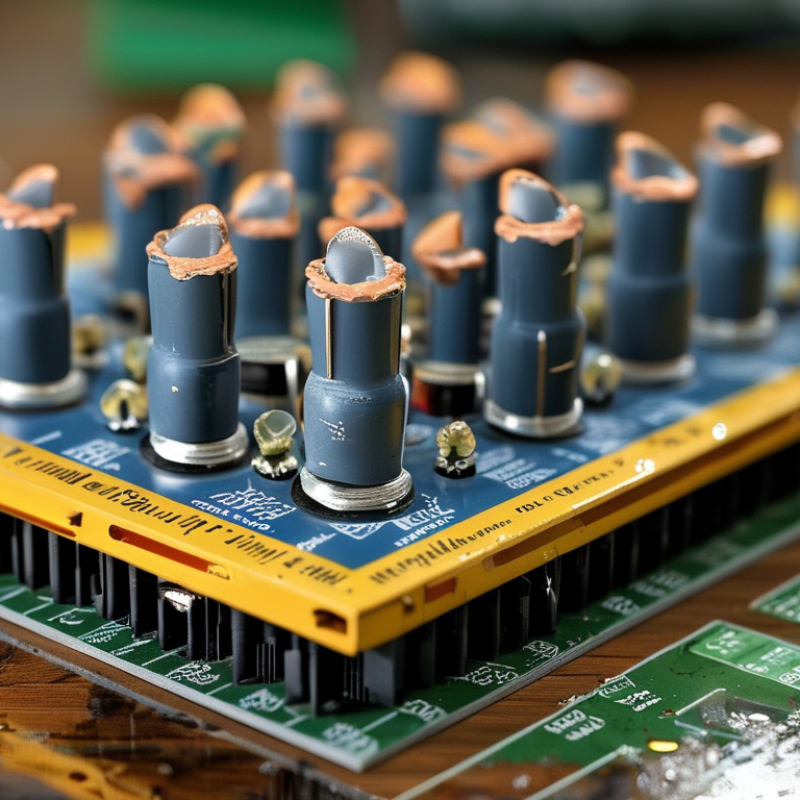
10 Silicon Diode Buying Tips for Global Buyers?

Define Silicon Diode Ratings: 50–1000 V VRRM, IF, IFSM, and Tj

Choosing a silicon diode starts with its ratings, not its package appearance. VRRM means repetitive peak reverse voltage. Common options range from 50 V to 1000 V. Select a rating above the circuit’s highest reverse voltage, including switching spikes. A small voltage margin is often not enough.

Tip 1: Check IF at the real operating temperature. IF is the average forward current, but cooling conditions change its practical value. A diode rated for 10 A may need less current inside a warm enclosure. Measure case temperature, airflow, and voltage drop together. I have seen a comfortable bench setup run surprisingly hot after installation.

Tip 2: Treat IFSM as emergency capacity, not normal operating current. It describes the non-repetitive surge current, such as capacitor charging or fault events. Compare the specified pulse duration with your actual inrush waveform.

Tip 3: Review Tj, the maximum junction temperature. Heat flows from the junction through the case and heatsink, so every layer matters. Keep operating Tj below the limit with a realistic thermal margin. This part is easy to underestimate.

Also check reverse recovery behavior in fast switching circuits. A high VRRM rating cannot compensate for excessive loss, poor cooling, or an unsuitable switching speed.

Match Forward Voltage: Silicon Diodes Typically Drop 0.7–1.0 V at 25°C

When sourcing silicon diodes internationally, forward voltage deserves more attention than its headline rating. At 25°C, a typical silicon diode drops about 0.7–1.0 V while conducting. That range is not a fixed rule. Current, junction temperature, and manufacturing spread all change the measured value. A diode carrying 1 A may show a different drop than one tested at 10 mA. Small differences matter. In a low-voltage circuit, a 0.9 V drop can consume much of the available supply.

Ask suppliers for forward-voltage data at a stated test current, not a single attractive number. Check the datasheet’s VF curve, maximum rating, and temperature conditions. For rectifiers, compare the expected load current with the specified test point. A 1.0 V reading at light current may hide a higher drop under real load. Request sample measurements when the circuit has limited voltage headroom. Use a calibrated meter and a suitable current source. Measure after the junction reaches operating temperature. Room-temperature checks alone can mislead.

Silicon’s forward voltage usually falls as temperature rises, which can reduce conduction loss but alter circuit behavior. In cold environments, the drop may increase. That detail matters for outdoor equipment and long cable runs. I have seen purchasing teams reject a suitable diode because they compared figures from different currents. I have also trusted a typical value too quickly. That was careless. Record voltage, current, temperature, and pulse duration in the purchasing specification. Leave tolerance for production variation, aging, and measurement error. A clear requirement prevents costly substitutions.

Evaluate Switching Speed: Choose 4 ns Recovery for High-Frequency Circuits

For global buyers, switching speed deserves careful attention in high-frequency circuits.

A silicon diode with 4 ns reverse-recovery time can reduce switching loss and limit unwanted current overlap. This matters in compact converters, pulse circuits, and fast rectifier stages.

Do not trust the number alone.

Check the datasheet conditions, including forward current, reverse voltage, junction temperature, and test method. These factors can change the measured recovery time.

Read the curves. In a 500 kHz converter, even a small recovery tail may create visible ringing on the switch node.

Use a short ground spring when probing, because a long oscilloscope lead can invent noise.

A fast diode may also bring higher leakage current, greater electromagnetic interference, or a less forgiving thermal profile.

The tradeoff is easy to miss.

I once favored a 4 ns part from its headline specification, then found excessive heat during repeated load testing. That mistake reminded me to test the complete circuit, not just the component table.

Ask suppliers for recent sample data, production tolerance, and test conditions.

Compare several samples at the intended current and temperature. Measure recovery behavior, junction temperature, ringing, and efficiency together.

Keep reasonable margin above the expected operating frequency.

Laboratory results can mislead. A controlled bench test and a real enclosure may behave differently.

Check Thermal Limits: Keep Junction Temperature Within −65°C to 175°C

10 Silicon Diode Buying Tips for Global Buyers?

Check Thermal Limits: Keep Junction Temperature Within −65°C to 175°C

Thermal limits deserve attention before comparing forward voltage or package size. A silicon diode rated from −65°C to 175°C may survive those temperatures, but continuous operation near 175°C reduces reliability. Junction temperature follows Tj = Ta + P × RθJA. A 2-watt loss with 40°C/W thermal resistance adds 80°C above ambient. That changes the decision quickly.

JEDEC JESD51-1A recommends controlled methods for measuring semiconductor thermal resistance. Buyers should request RθJA, RθJC, pulse ratings, and mounting conditions. These values are not interchangeable. A 2024 WSTS industry forecast placed global semiconductor sales near 588 billion dollars, showing the scale of modern component demand. Yet large-volume purchasing does not fix poor thermal design. The diode still experiences every heat cycle.

Check the hottest operating point, not the average temperature. Measure near the package, then estimate junction temperature with the manufacturer’s thermal model. Leave practical margin below the 175°C ceiling. Forced airflow, copper area, and a suitable heatsink can reduce thermal stress. Small details matter. I have seen calculations fail because engineers used room temperature instead of enclosure temperature. That mistake is easy to repeat. Also review cold-start behavior near −65°C, since leakage, switching speed, and solder stress may change. Request test evidence tied to the exact package and mounting layout.

10 Silicon Diode Buying Tips for Global Buyers: Check Thermal Limits

Keep the junction temperature within the specified operating range, typically from −65°C to 175°C depending on the diode type and package.

The chart compares representative junction-temperature ranges for common silicon diode categories. Before purchasing, confirm the exact minimum and maximum junction temperatures in the component datasheet, then allow sufficient thermal margin for ambient temperature, forward-current losses, switching losses, and PCB cooling conditions.

Verify Global Compliance: Confirm RoHS, REACH, IEC, and Manufacturer Traceability

Global silicon diode buying requires more than checking voltage and current ratings. Verify RoHS status against the European Commission’s ten restricted substances, including lead, mercury, and certain flame retardants. REACH also matters. ECHA’s 2024 Candidate List contained more than 240 substances of very high concern. A supplier’s declaration should identify the applicable revision and test method, not merely state “compliant.”

Ask for IEC-related evidence, including relevant semiconductor safety and performance documentation, plus material declarations aligned with IEC 62474. Confirm the manufacturer’s legal entity, production site, lot code, and certificate of conformity. Trace each reel to a test report and shipment record. Keep the evidence accessible for the product’s expected service life. A certificate alone is not proof. The 2024 Global E-waste Monitor reported 62 million tonnes of electronic waste generated in 2022, with only 22.3% formally collected and recycled. That figure makes material control practical, not administrative. A practical weakness remains: buyers often request compliance documents after shipment. Do it before approval. Compare dates, lot numbers, and laboratory scope carefully. Suppliers may provide incomplete files, and buyers may overlook small inconsistencies. That is where a second review helps.

10 Silicon Diode Buying Tips for Global Buyers? - Verify Global Compliance: Confirm RoHS, REACH, IEC, and Manufacturer Traceability

No. Buying Tip Compliance or Quality Dimension What to Verify Acceptable Evidence Buyer Checkpoint
1 Confirm the exact diode specification Electrical performance Part number, diode type, repetitive peak reverse voltage (VRRM), average forward current (IF(AV)), forward voltage (VF), reverse current (IR), package, and polarity marking. Current datasheet, controlled product drawing, and purchase specification. Match every required parameter with the application and the latest controlled document.
2 Verify RoHS status Restricted substances Whether the supplied configuration complies with Directive 2011/65/EU and amendment (EU) 2015/863, including applicable exemptions. Signed RoHS declaration, material declaration, and supporting test or supplier-control records where relevant. Check document revision, product scope, date, authorized signatory, and exemption references.
3 Screen for REACH obligations Chemical substance communication Presence of substances of very high concern (SVHC) above the applicable threshold and any communication duties under Regulation (EC) No 1907/2006. REACH declaration with the relevant SVHC Candidate List revision and product-level scope. Request an updated statement when the Candidate List changes or the material composition changes.
4 Use the correct IEC reference Product test and terminology For semiconductor discrete devices, confirm that applicable ratings and test methods are aligned with IEC 60747-2 or the relevant current product standard. Datasheet test conditions, qualification report, and test plan identifying the applicable IEC standard and edition. Do not accept a generic “IEC compliant” claim without a standard number, edition, and scope.
5 Check technical documentation control Technical file and conformity evidence Whether the supplier maintains objective evidence linking materials, design, testing, and conformity claims to the exact product configuration. Controlled drawings, bill of materials, material declarations, risk assessments, and test reports; IEC 63000 may be used for RoHS technical documentation. Verify document numbers, revision history, approval status, and retention arrangements.
6 Demand manufacturer and lot traceability Supply-chain authenticity Ability to trace each shipment to production date or lot, wafer or assembly information where applicable, inspection results, and shipping records. Lot code, date code, certificate of conformance, packing-list linkage, and traceability procedure. Ensure labels, reels, cartons, certificates, and invoices carry consistent identifiers.
7 Validate packaging and moisture controls Storage and assembly reliability Moisture sensitivity classification, packing method, storage limits, shelf life, and handling requirements for the selected package. Packaging specification, moisture-barrier-bag label, humidity indicator requirements, and handling instructions where applicable. Inspect unopened packaging, desiccant condition, date codes, and storage history on receipt.
8 Review quality-system capability Process consistency Controls for incoming materials, process inspection, final testing, nonconforming product, corrective action, and change management. Current quality certificate, audit summary, process-control plan, inspection records, and change-notification procedure. Confirm certificate scope and validity; a quality certificate does not replace product-specific compliance evidence.
9 Test samples before volume approval Incoming quality and electrical fit Visual marking, dimensions, polarity, VF, IR, reverse-voltage withstand, thermal behavior, and solderability against the agreed specification. Receiving inspection report, calibrated equipment records, and sample test results linked to the lot code. Define acceptance limits, sample size, test conditions, and failure disposition before ordering production quantities.
10 Confirm market-specific obligations Import and regulatory readiness Destination-country requirements, customs classification, labeling, importer responsibilities, product safety rules, and customer-specific restrictions. Import documentation, tariff classification review, declarations, labels, and destination-market compliance checklist. Review requirements with the importer or compliance specialist before shipment, especially when the diode is part of finished equipment.

Note: Compliance requirements can depend on the product configuration, destination market, intended use, and current legal revisions. Always verify the applicable official requirements before purchase.

Article Source: