China Best Plastic Injection Molding Manufacturer?
Choosing the China best plastic injection molding manufacturer requires more than comparing factory prices. A reliable partner must convert drawings into consistent parts, not merely attractive quotations. This guide examines practical evidence, including engineering experience, mold design, material selection, production control, and communication. It considers how suppliers manage complex details, such as 0.02-millimeter tolerances, textured surfaces, thin walls, and molded-in inserts.
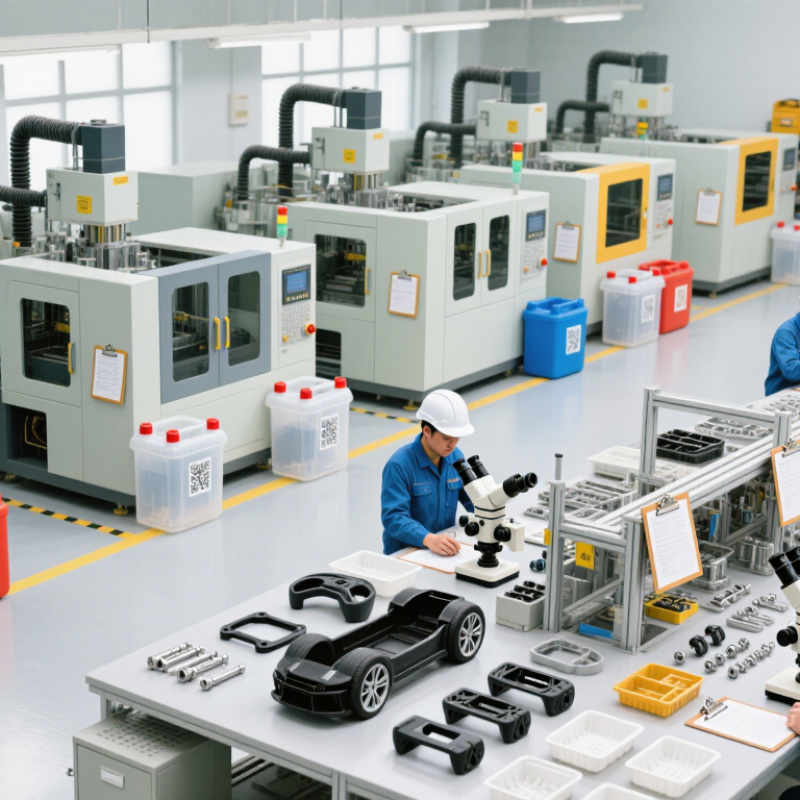
Real manufacturing experience appears on the production floor. Look for clean machines, labeled resin containers, documented inspection points, and samples from recent projects. Ask whether the manufacturer performs mold-flow analysis, first-article inspection, and dimensional checks with calibrated equipment. Certifications can support credibility, but they should be verified and matched to the required market. ISO 9001 alone does not prove excellent molding.
No supplier is perfect. That matters. A factory may offer strong tooling expertise but limited experience with medical-grade materials. Another may provide fast production but communicate poorly after order approval. This outline weighs those trade-offs carefully. It also reviews lead times, minimum order quantities, maintenance records, quality reports, packaging methods, and after-sales support. Customer references and transparent corrective-action records can reveal more than polished website claims. The strongest candidate is not always the cheapest or largest. It is the manufacturer that understands your part, explains its limits, and delivers stable results across repeated production runs. There is room for doubt. Good decisions leave room for testing.
Defining “Best”: Quality, Cost, Lead Time, Capacity, and Compliance
China Best Plastic Injection Molding Manufacturer?
“Best” depends on your project, not a universal ranking. A reliable manufacturer should prove quality through dimensional reports, mold-flow analysis, and documented process controls. During production, inspect sample parts for flash, sink marks, warpage, and color consistency. Ask how rejected parts are recorded and corrected. Honest answers matter more than polished claims.
Cost deserves careful review. A low quotation may exclude mold maintenance, packaging, inspection, or engineering changes. Lead time also needs evidence, including tooling schedules, trial dates, and production capacity. A capable factory should explain its machines, available tonnage, staffing, and backup plans. However, capacity alone is not enough. Poor scheduling can still delay a small order. We have seen promising timelines fail when approvals were unclear.
Tips: Request a complete quotation, material certificate, sample approval plan, and realistic delivery date. Confirm communication channels and change-control procedures before payment. Compliance should include traceable materials, safe working practices, and documents required for your target market. Depending on the product, this may involve restricted-substance controls, electrical safety records, or customer-specific standards. Do not assume one certificate proves everything. Verify its scope and validity. The best partner may cost slightly more, but fewer defects and clearer accountability can protect the total project budget.
Tool-Life Evidence: SPI Class 101 Molds Exceed 1 Million Cycles
China Best Plastic Injection Molding Manufacturer?
Tool-Life Evidence: SPI Class 101 Molds Exceed 1 Million Cycles
In high-volume injection molding, tool life is measured on the press, not in a sales brochure. An SPI Class 101 mold is designed for demanding production and can exceed one million cycles when properly built and maintained. Practical evidence includes cycle logs, cavity inspections, steel certifications, and replacement records for wear components.
A reliable manufacturer controls steel hardness, cooling layout, machining accuracy, and mold alignment. These details matter. A polished cavity may still fail early if cooling is uneven or ejector pins lack support. During production trials, engineers should check flash, part weight, cycle time, and surface changes at regular intervals. A small increase in cycle time can reveal wear before defects become expensive.
Maintenance remains essential. Lubrication schedules, water-flow checks, and planned inspections help protect the mold after delivery. One project may reach 1.2 million cycles with stable parts, while another may need repair earlier because of abrasive resin, high clamping pressure, or poor cleaning. Conditions differ. That is where careful reporting matters.
Past experience is useful, but it should not replace measurable proof. Ask for traceable test data, maintenance history, and clear acceptance criteria. Even strong tooling can improve. A better cooling channel, a tougher insert, or a more disciplined inspection interval may extend service life further.
Production Validation: Cpk ≥1.33, Scrap Rate, and First-Pass Yield
Choosing the best plastic injection molding manufacturer in China requires more than comparing quotations. Production validation should show measurable process capability, not attractive promises. For a molded housing, the team should monitor critical dimensions, weight, flash, sink marks, and assembly fit. A Cpk of at least 1.33 is a practical target for stable characteristics. However, one successful trial does not prove long-term control.
During validation, engineers can inspect several hundred parts from different cavities and production hours. They should record cavity balance, mold temperature, injection pressure, and cooling time. First-pass yield shows how many parts meet requirements without rework. Scrap rate reveals material loss and hidden process weakness. A high yield with frequent manual adjustments deserves careful review. It may not remain stable during night shifts.
Real production experience also exposes imperfect assumptions. A process can reach Cpk 1.40 while slowly drifting toward a specification limit. Short sampling periods can make results look better than reality. Reliable manufacturers therefore use control charts, calibrated gauges, cavity-level records, and documented corrective actions. They should explain failed samples openly and repeat validation after meaningful changes. Clear reports, traceable measurements, and trained operators provide stronger evidence than polished presentations. Supplier audits should also confirm that inspection methods match actual customer use.
China Best Plastic Injection Molding Manufacturer? - Production Validation: Cpk ≥1.33, Scrap Rate, and First-Pass Yield
| Validation Area |
Process / Part Family |
Production Lots |
Samples Evaluated |
Cpk |
Scrap Rate |
First-Pass Yield |
Result |
| Dimensional Capability |
Automotive interior trim |
8 |
1,600 |
1.67 |
0.82% |
98.45% |
Pass |
| Dimensional Capability |
Electrical enclosure |
6 |
1,200 |
1.52 |
1.10% |
97.92% |
Pass |
| Dimensional Capability |
Medical-grade housing |
5 |
1,000 |
1.81 |
0.48% |
99.20% |
Pass |
| Appearance Quality |
Textured consumer housing |
7 |
1,400 |
1.44 |
1.36% |
97.35% |
Pass |
| Assembly Fit |
Two-shot functional component |
6 |
1,200 |
1.58 |
0.92% |
98.08% |
Pass |
| Overall Validation Result |
32 |
6,400 |
1.60 |
0.94% |
98.20% |
Validated |
Acceptance criteria: Cpk ≥ 1.33 for critical characteristics, scrap rate ≤ 2.00%, and first-pass yield ≥ 97.00%. Cpk is calculated using a stable process dataset and the applicable engineering specification limits. First-pass yield excludes parts requiring rework or adjustment before acceptance.
Total-Cost Comparison: Tooling, Piece Price, Logistics, and 5-Year TCO
China Best Plastic Injection Molding Manufacturer?
The lowest piece price rarely identifies the best injection molding partner. A five-year total-cost model should include tooling, unit price, logistics, quality losses, maintenance, and payment terms. For example, a 10,000-dollar mold spread across 250,000 parts adds only 0.04 dollars per part. That changes the decision quickly.
Tooling deserves technical scrutiny. Ask about steel grade, expected shot life, cooling-channel design, spare inserts, and ownership terms. A cheaper mold may require earlier refurbishment or produce unstable dimensions. That shortcut fails. The International Trade Centre’s 2023 Trade Map data also shows how tariff codes and destination markets can affect landed costs, not just factory quotes. Prototype approval, inspection frequency, and documented process capability reduce unpleasant surprises.
Logistics can dominate distant production. The World Bank’s Logistics Performance Index 2023 reported a median of 44 days from port entry to final consignee globally. UNCTAD’s Review of Maritime Transport 2023 states that maritime shipping carries over 80% of world trade by volume. Freight, port handling, insurance, customs brokerage, and buffer inventory belong in the spreadsheet. I would also test a 10% demand drop and a two-week shipping delay. The result may favor China, local production, or a mixed model. A supplier’s audit trail, sample records, corrective-action history, and transparent assumptions provide stronger evidence than polished quotations. Mistakes still happen. The model should show them.
China Best Plastic Injection Molding Manufacturer? — Total-Cost Comparison
Five-year total cost is estimated for 500,000 molded parts, based on one-time tooling, production piece price, and inbound logistics. China shows the lowest modeled total cost in this benchmark, while local production reduces transit distance but carries higher tooling and piece-price assumptions. Actual quotations vary by resin, part size, annual volume, mold complexity, quality requirements, and shipping terms.